

The eyelid is the part of the eye responsible for protecting it from external factors, and when it becomes inflamed, the discomfort can be so great that it can even make it difficult to see. Knowing all about swollen eyelids (or puffy eyes) is very important in order to see a professional as soon as possible if necessary. In today’s post we explain everything you need to know about swollen eyelids: their causes and how to treat them.
What is a swollen eyelid?
You’ve probably heard of this discomfort, but do you really know what a puffy eyelid is? When you suffer from a swollen eyelid, the connective tissue around the eye becomes inflamed and there is usually an excess of fluid in it. In addition, it can sometimes be accompanied by more symptoms depending on its causes.
Causes of puffy eyelids
From allergies to conjunctivitis or eye injuries, the causes of puffy eyes are varied and each one has an effect on vision. Another common cause of swollen eyelids is tear duct problems, as the eyelids are responsible for distributing tears to the eye surface when blinking.
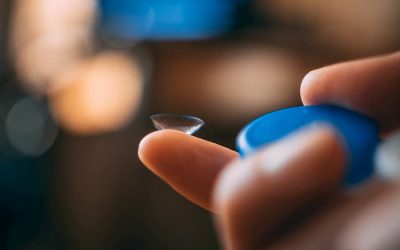
One of the most common symptoms is swollen eyelids due to conjunctivitis from contact lens wear.
Although the causes of swollen eyelids are so varied, the symptoms are similar and are often accompanied by secondary symptoms depending on the cause, e.g. eye irritation, dryness or discharge from the eye.
Why do upper eyelids swell?
The upper eyelids are usually the most affected when it comes to swelling due to their protective function against external agents. However, there are many more reasons why the upper eyelids swell, for example, lack of sleep is one of the main reasons.
 A rarer but also common cause is insect bites, specifically mosquito bites, which cause swollen eyelids. This cause is very easy to recognise, as it is usually accompanied by a small red bump.
Swollen eyelid on awakening
Puffy eyes can be caused by fluid accumulation in the tissues. This is the main cause of swollen eyelids on waking, as sleeping slows down lymphatic circulation. In principle, swollen eyes on waking is not a serious problem, as it is not usually progressive and does not cause vision problems, but it is a cause for concern when it persists for months.
Thyroid swollen eyelid
Thyroid swollen eyelid has its own name, thyroid ophthalmopathy is the name given to the inflammatory disease that causes the tissues around the eyes to swell due to the thyroid. In this case, the symptoms appear gradually and little by little, first you usually notice dryness in the eyes, peaks and redness until you end up noticing the inflammation of the swollen eyelids.
Swollen eyelid due to disease
- Stye: A bacterial infection of a sebaceous gland in the eyelid, usually caused by staphylococcus. It presents as a painful red bump near the edge of the eyelid.
- Chalazion: This is a cyst that forms due to a blocked meibomian gland. Unlike a stye, a chalazion is not painful and is usually larger.
- Allergies: Allergic reactions to substances such as pollen, dust, animal hair and certain foods can cause swelling of the eyelids, along with symptoms such as itching and tearing.
- Blepharitis: Inflammation of the edges of the eyelid, often caused by bacterial growth or sebaceous gland dysfunction. It can cause crusting of the eyelashes and a gritty sensation in the eyes.
- Orbital cellulitis: A severe infection of the tissues around the eye that may spread from the sinuses. Symptoms include fever, pain on eye movement and blurred vision.
Symptoms of swollen eyes and eyelids
The symptoms of swollen eyelids vary depending on the cause, although today we are going to look at the most common symptoms of swollen eyelids. One of the main and most noticeable symptoms is irritation and redness of the eyelid. Other common symptoms are dry eyelids and a high sensitivity to light. In the event of any kind of pain in the eyelids, it is very likely to be due to some kind of infection.
Why do eyes swell up?
Swelling around the eyes is usually caused by a build-up of fluid causing eye pain when the eyes are moved. This can be caused by eye diseases such as blepharitis, circulatory problems, stress, tiredness or anxiety. In some cases, we may find that people are prone to swollen eyes while sleeping. This is due to the fact that while we sleep, we lack the blinking action that causes swollen eyes. This is why we may wake up with swollen eyelids in the morning.

How to treat swollen eyelids
The first essential tip on how to treat swollen eyelids is to avoid rubbing your eyes, as this will only make the symptoms worse. If symptoms are mild, another very effective way to treat puffy eyelids is by applying cold. This remedy rehydrates the skin and reduces the swelling for a while, so you can feel the swelling subside. When swollen eyelids are caused by a stye, it is essential to stop using make-up or any type of make-up product around the eye.
When to see an ophthalmologist
Although swollen eyes are not always a reason to see an ophthalmologist, if they are accompanied by these symptoms, consider making an appointment:
- Persistent swelling: If swelling does not improve after 48 hours or worsens despite home treatment, it is important to seek professional help.
- Severe pain: Severe pain in the eyelids or eye is a warning sign. This may indicate a serious infection such as orbital cellulitis, which needs immediate treatment.
- Vision problems: If you experience vision loss, blurred vision, or double vision, it is crucial to see an ophthalmologist as soon as possible. These symptoms may be indicative of more serious problems, such as infections or conditions affecting the eye structure.
- Fever and other systemic symptoms: The combination of fever and swelling of the eyelids may signal a systemic or serious infection that needs urgent medical attention.
- Hypersensitivity to light: Photophobia or hypersensitivity to light accompanied by swelling may be a sign of eye infections such as conjunctivitis.
- Eye discharge: Yellowish or greenish discharge, especially if thick, may be a sign of bacterial conjunctivitis or other infection requiring antibiotic treatment.
- Extensive swelling: Swelling that spreads to other areas of the face, such as the cheeks or brow, may be a sign of preseptal or orbital cellulitis, conditions that require immediate treatment.
- Eye trauma: Any injury to the eye or surrounding area that causes swelling should be evaluated by an ophthalmologist to determine if the eye is swollen.
Tips for preventing swollen eyelids
Although there are cases where it is almost impossible to avoid swollen eyelids, there are some tips to prevent swollen eyelids.
- Quality sleep: getting quality sleep, with the necessary hours is the most important advice to avoid it, without this advice it will be difficult to avoid it.
- Correct hydration: Hydration also plays a very important role in preventing swelling, drinking the recommended two litres of water daily helps prevent fluid retention, and, as a consequence, swelling of the eyelids is reduced.
- Daily cleansing: Wash your face and eyelids with warm water and a mild cleanser to remove dirt, dust and other contaminants. Use specific wipes for eye hygiene if you are prone to blepharitis.
- Avoid touching your eyes: Hands carry bacteria and other pathogens that can cause eye infections or irritation. Wash your hands frequently and avoid rubbing your eyes.
- Sunglasses: Wear sunglasses with UV-protective lenses to protect your eyes from harmful ultraviolet rays and irritants such as wind and dust.
- Protective equipment: If you work in environments where volatile particles or chemicals are present, wear appropriate protective eyewear.
Finally, having the right contact lenses is very important to avoid eye problems of this type. At Opticas Avenida we help you find the contact lenses that best suit you thanks to our contact lens services. After knowing a little more about swollen eyelids, always remember to take care of your eyes to avoid both swollen eyelids and other types of diseases.
Source:
- https://journals.lww.com/co-allergy/abstract/2019/10000/ocular_allergy__update_on_clinical_trials.14.aspx
- https://www.aao.org/salud-ocular/consejos/20-razones-para-consultar-al-oftalm%C3%B3logo
- https://www.msdmanuals.com/es/hogar/trastornos-oft%C3%A1lmicos/s%C3%ADntomas-de-los-trastornos-oculares/hinchaz%C3%B3n-de-los-p%C3%A1rpados
- https://www.aaojournal.org/article/S0161-6420(18)32645-9/fulltext


0 Comments